
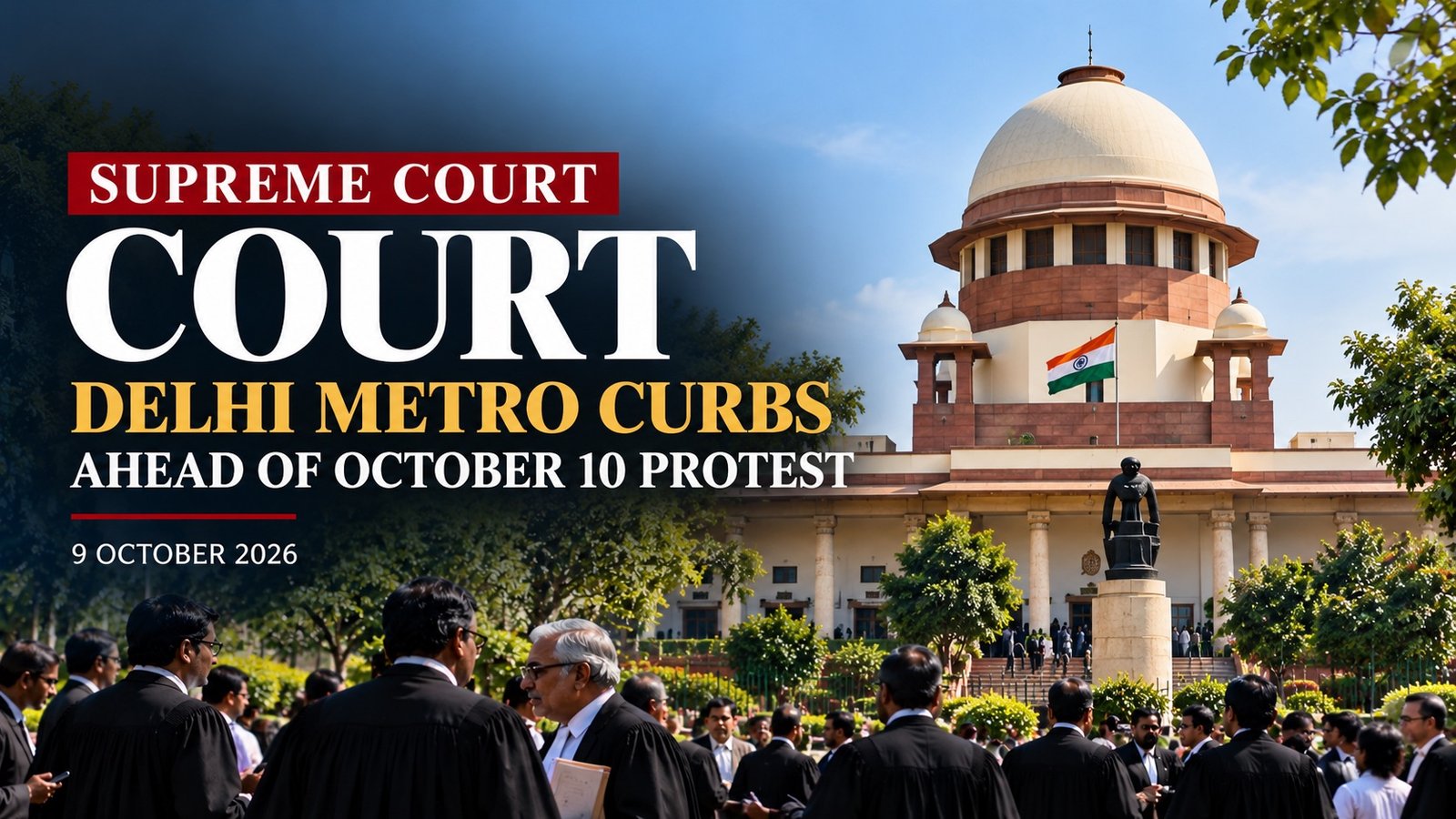
New Delhi: Supreme Court Seeks Balance Between Security Measures and Commuters’ Rights
The Supreme Court of India on Friday, 9 October 2026, directed the Centre and concerned authorities to reconsider sweeping restrictions on Delhi Metro and railway services ahead of a planned protest in the national capital on 10 October. The Court emphasised that security arrangements must be proportionate and should not bring essential public transport to a complete standstill.
A Bench comprising Chief Justice of India Surya Kant and Justices Joymalya Bagchi and V. Mohana heard concerns over proposed restrictions affecting metro stations, railway services and road movement in Delhi. The restrictions were planned in anticipation of a demonstration called by the Cockroach Janta Party (CJP) and other groups.
Supreme Court Raises Concerns Over Commuter Hardship
During the hearing, the Bench expressed concern about the proposed closure of entry and exit gates at 57 Delhi Metro stations and restrictions affecting trains arriving in the capital. The Court highlighted the difficulties such measures could create for students, employees, senior citizens and other commuters travelling from across Delhi and the National Capital Region.
Chief Justice Surya Kant stressed that authorities could regulate movement to maintain public order, but such measures should not deprive ordinary citizens of access to essential transport facilities.
The Court made clear that the responsibility of law enforcement authorities extends beyond protecting government property to ensuring the safety and convenience of the public.
Centre Assures Review of Restrictions
Solicitor General Tushar Mehta, appearing for the Centre, assured the Bench that he would take up the matter with the government and seek reconsideration of the proposed restrictions.
The Court stated that there should be no complete prohibition on the movement of metro trains. It also called for revised public advisories concerning metro and railway operations, traffic movement and road barricading so that commuters could make informed travel arrangements.
Authorities were asked to consider proportionate restrictions and identify alternative routes wherever necessary to minimise disruption.
Right to Protest and Public Order
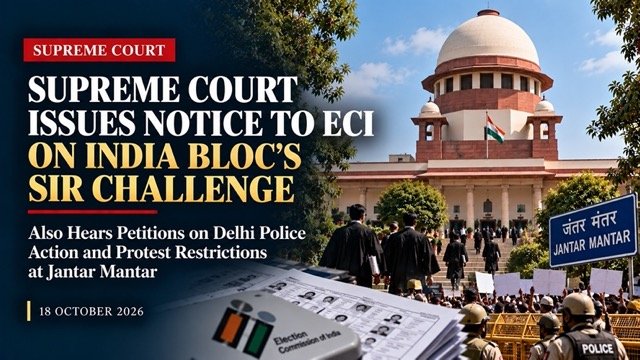
The proceedings arose amid concerns about restrictions imposed ahead of the proposed 10 October demonstration. The dispute raises questions about balancing the right to peaceful assembly with the State’s responsibility to maintain public order and protect essential services.
The Court’s observations focused on the wider impact of transport restrictions on the public. The hearing did not amount to a general prohibition on preventive security measures; instead, it underscored the need for authorities to assess whether proposed restrictions were necessary and proportionate.
What Happens Next?
The Centre and concerned authorities are expected to review the proposed arrangements and publicise revised instructions regarding metro services, railway operations and traffic management.
Commuters have been advised to check official transport advisories before travelling, as operational arrangements may change in response to the security situation.
Legal Significance: The proceedings highlight the importance of proportionality in administrative and policing measures, particularly where restrictions intended to maintain public order may significantly affect access to essential public services.
Disclaimer: This article is an informational summary of reported court proceedings, not legal advice. Refer to the official court order for the precise operative directions.
Comments
Be the first to comment.